The Gulf is no longer a business region where every foreign investor needs a local shareholder by default. In 2026, several GCC countries now allow 100% foreign ownership, especially for service, technology, consulting, logistics, industrial, e-commerce, and professional activities. However, the real answer is not as simple as “yes, foreigners can fully own a company in the GCC.” Each country has its own rules, approval process, restricted activities, minimum capital expectations, licensing conditions, and sector-specific limits.
This change is a great opportunity for entrepreneurs, consultants, manufacturers, trading companies and international groups. Investors are able to maintain complete control over profits, decision making, banking, branding, contracts, hires and ultimately exit planning. But, as in full ownership, not always simple approval. Local partnership required under special permission, ministry approval or a government investment license are still involved in some activities.
The 2026 GCC Ownership Guide: Where You Can Fully Own a Business Throughout UAE,Saudi Arabia, Bahrain, Qatar, Oman, Kuwait.

What Does 100% Foreign Ownership Mean?
100% foreign ownership means a non-GCC or foreign investor can own all shares of a company without giving equity to a local national or local corporate partner. As a result, the investor controls the company’s capital, voting rights, profits, management appointments, and business strategy.
However, ownership and licensing are two different matters. A country may allow full ownership, but still require approvals for regulated activities such as banking, insurance, recruitment, oil and gas, education, defence, security, healthcare, telecom, real estate, or media. Therefore, investors should check both the ownership rule and the activity approval rule before forming a company. Get details on Company Registration Service.
GCC Foreign Ownership Comparison Table 2026
|
GCC Country |
Can Foreigners Own 100%? |
Best Route for Full Ownership |
Key Restrictions |
|
UAE |
Yes, for most mainland and free zone activities |
Mainland LLC, free zone company, branch |
Strategic sectors need approval |
|
Saudi Arabia |
Yes, for many activities with MISA license |
MISA foreign investment license |
Some sectors need Saudi participation or higher conditions |
|
Bahrain |
Yes, across many activities |
Sijilat company registration |
Restricted activities may need Bahraini ownership |
|
Qatar |
Possible, but not automatic for all mainland activities |
Ministerial approval or free zone setup |
Standard mainland rule often requires Qatari partner unless exception applies |
|
Oman |
Yes, for many sectors under FCIL |
LLC or free zone company |
Some activities remain reserved or restricted |
|
Kuwait |
Possible through KDIPA approval |
KDIPA licensed investment entity |
Standard companies usually still follow foreign ownership limits |
UAE: One of the Easiest GCC Markets for Full Ownership
The UAE will still remain one of the hot destinations for companies with 100% foreign ownership. The reform of the Commercial Companies Law, allows direct ownership up to 100% for foreign investors in many business activities related to mainland companies. Moreover, it has always been the case that free zones in the UAE welcomed full ownership of business entities — providing a high level of flexibility for start-ups, consultants, traders, holding structures and professional services or international service companies.
In Dubai, Abu Dhabi, Sharjah, Ajman, Ras Al Khaimah, and other emirates, investors can often set up a mainland company without a UAE national shareholder. Furthermore, free zones such as DMCC, IFZA, Meydan, RAKEZ, Dubai South, JAFZA, ADGM, and DIFC allow foreign investors to hold 100% equity.
Not every activity is automatically a qualified activity, but investors should be aware of that. However, other sectors, such as strategic impact activities, financial services and defence-related work, telecom and energy needed additional approvals. Hence, it provides significant flexibility for the UAE but as always, specifics of what activity takes place on this license are pivotal. Looking for a Company Registration in UAE?
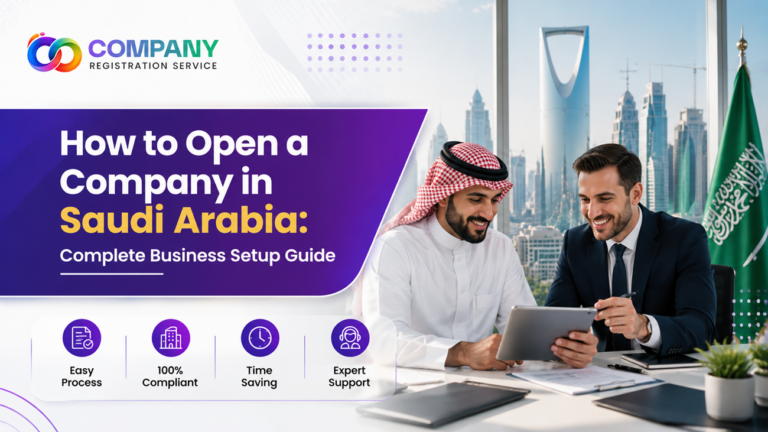
Saudi Arabia: Full Ownership With a Serious Compliance Process
Foreign investors are seeing Saudi Arabia as one of the fastest growing destinations. A healthy demand for foreign talent has arisen from Vision 2030, giga projects, industrial zones and tourism development along with technology initiatives and government procurements. Thus, many foreign investors opt for Saudi Arabia in order to expand regionally.
Most Saudi companies in services, consulting, technology, manufacturing and industrial sectors are 100% foreign owned. On the other hand, a Foreign Investment license from MISA is generally required by the company. It includes wearing attire such as the profile of the parent company, financial statements, activities (business plan), capital and records of compliance.
For already established businesses wanting genuine market access, local hiring and contracts and opportunities for long-term growth, Saudi Arabia fits the bill. In contrast, whilst exactly for small and relatively early stage ventures the process might even be less quick than it is in a country such as the UAE or Bahrain. In some instances, additional conditions apply by way of foreign investors to be involved in certain sectors due to the nature of trading activities, types of contracting and recruitment, real estate or media categories or even regulated sectors. Get details on Company Registration in KSA.
Bahrain: A Practical Choice for 100% Ownership
Bahrain has an exemplary and investor-friendly environment in GCC. Many activities allow 100% ownership by foreigners and the whole procedure is often less complex than in some of the bigger Gulf markets. Bahrain also has attractive setup costs, the ability to reach Saudi Arabia via King Fahd Causeway, a robust banking sector and business-friendly regulatory regime.
Ideal for foreign owned Companies, consulting firms, IT companies, logistics businesses, fintech companies, trading & regional service providers. Additionally, company registration is more structured and above-the-board as a result of the Sijilat system.
Nonetheless, Bahrain has retained limits on certain pursuits. Bahraini ownership is also mandatory to start some businesses, and approval from the Ministry of Industry and Commerce or clearance from sector regulators may be required. Thus, before deciding on ownership structures, investors should ascertain the actual commercial activity. Looking for a Company Registration in Bahrain?
Qatar: Full Ownership Is Possible, But Approval Matters
Qatar has made many sectors open to investment and foreign ownership, but not always 100% without restrictions on the mainland. Unless the foreign investor obtains a higher ownership percentage, Qatari partners may continue to hold at least 51% of shares pursuant to many traditional company structures. On the other hand, the investment law in Qatar allows for up to 100% foreign ownership in some economic sectors as long as they are permitted and classified by activity.
This makes Qatar attractive but slightly more approval-driven. Foreign investors can explore full ownership through the Ministry of Commerce and Industry, Qatar Free Zones, Qatar Financial Centre, or sector-specific platforms depending on the business activity.
Qatar works well for companies in technology, consulting, sports services, logistics, education support, engineering, hospitality, and project-based services. However, retail trading, commercial agency, real estate, banking, insurance, and certain strategic sectors may require careful review. Get details on Company Registration in Qatar.
Oman: Stronger Ownership Flexibility Under FCIL
The Foreign Capital Investment Law is a law that has developed Oman’s foreign investment framework. This means foreign investors are now permitted to hold 100% of an Omani company within approved sectors. Such reformideg that Oman became attractive and suitable for logistics, manufacturing, tourism, fisheries,p ore trapment, renewable energy technology consulting which relates to whatever input use of import export
Free zones and special economic zones also include Sohar, Salalah, Duqm, and Al Mazunah among others in Oman. They grant full ownership, customs exemptions, land accessibility, access to ports and industrial benefits. As a result, Oman is suitable for investors requiring operational ground space with warehousing, manufacturing or access to regional trade.
However, Oman still reserves some activities for Omani nationals or applies special controls. Small retail trades, certain local services, manpower-related activities, and sensitive sectors may face restrictions. In addition, approvals may vary depending on capital, activity, location, and regulator requirements. Looking for a Company Registration in Oman?
Kuwait: Full Ownership Is Possible, But Not the Default
Kuwait is even more choosy than the UAE, Bahrain or Oman about allowing full foreign ownership. As a rule, foreign investors are limited in ownership levels and must obtain approval by the Kuwait Direct Investment Promotion Authority (KDIPA).
KDIPA can approve a foreign ownership of 100% for foreign investment entities / branch office or representative offices. Nonetheless, the approval is conditional upon economic value, job creation, technology transfer, training, impact on diversification and alignment with Kuwait’s development priorities (Government of Kuwait 2018).
Therefore, Kuwait is better suited for serious investors with strong financials, specialised expertise, industrial value, technology contribution, or strategic projects. In contrast, smaller businesses that simply want a quick low-cost GCC company may find Kuwait less flexible.
Where Can You Fully Own Most Easily?
|
Investor Goal |
Best GCC Option |
|
Fast setup and flexible ownership |
UAE or Bahrain |
|
Large market access and government projects |
Saudi Arabia |
|
Logistics, ports, and industrial operations |
Oman or UAE |
|
Low-friction service company |
Bahrain or UAE free zone |
|
Qatar market contracts |
Qatar with correct approval route |
|
Strategic Kuwait expansion |
KDIPA route in Kuwait |
Activities That Usually Support Full Foreign Ownership
Many GCC countries support 100% foreign ownership in activities such as:
- Management consulting
- IT services and software development
- Digital marketing and media support
- E-commerce and online services
- Import-export and general trading, depending on country rules
- Logistics and freight forwarding
- Manufacturing and light industry
- Engineering consultancy
- Professional services
- Tourism support services
- Education support and training
- Healthcare support, subject to regulator approval
However, the final approval always depends on the activity wording in the license.
Activities That May Still Need Local Ownership or Extra Approval
Foreign investors should be careful with:
- Banking and financial services
- Insurance
- Oil, gas, and energy concessions
- Defence and security
- Telecom services
- Recruitment and manpower supply
- Commercial agency
- Real estate development
- Media and publishing
- Healthcare clinics and pharmacies
- Education institutions
- Certain retail and local service activities
Moreover, some activities may allow ownership but still require separate regulator approval before operation.
Related Services:
» Company Registration in Ajman
» Company Registration in Abu Dhabi
» Company Registration in Dubai
» Company Registration in Sharjah
» Company Registration in Jeddah
Free Zone vs Mainland Ownership Across the GCC
Free zones are usually the easiest route for full foreign ownership. They offer simple registration, full profit repatriation, flexible office options, and sector-focused benefits. However, free zone companies may face limits when trading directly in the local mainland market.
Mainland companies, meanwhile, allow broader local market access, government contracts, local invoicing, and easier physical operations. However, mainland rules differ sharply across GCC countries. Therefore, the right choice depends on whether you want regional trading, local sales, warehousing, consulting, contracting, or government project access.
How to Choose the Right GCC Country in 2026
Select the UAE for speed, International Bank account availability, more Free Zone choices and better regional credibility. Select Saudi to target the sectors connected with Vision 2030, planning for large-scale growth or aiming for government contracts. Go with Bahrain if low Op-Ex, low ownership hassle & access to Saudi clients are what you need. Select Qatar if you have project-related opportunities, government-related contracts, or a sector which receives permission for 100%-ownership. If your business requires either port, logistics or industrial land in Oman for it to derive an operational value, then choose Oman. Go with Kuwait if you have an exceptional investment project that can fulfill KDIPA requirements.
Related Articles:
» UAE VAT Registration and Compliance for Newly Registered Companies
» Setting Up a UAE Holding Company for GCC Regional Expansion
» Mainland vs Free Zone vs Offshore Company Setup in Dubai
» How to Register a Company in Qatar as a Foreign Investor?
» 100% Foreign Ownership in Dubai Mainland — Sectors, Process and Reality Check
Navigating Foreign Ownership Rules in the GCC
The GCC has changed a lot. By 2026, full foreign ownership throughout the GCC is anything but unusual (and has even been introduced in Saudi Arabia) but nevertheless lags behind across the region. For many investors, the easiest step is to simply move into the UAE and Bahrain. Oman lends great flexibility to companies focused on industry and trade. Saudi Arabia awards fully-owned opportunities as well, but the process requires better documentation and adherence. Approval matters Qatar allows full ownership in numerous cases. KDIPA is the exclusive route for full ownership in Kuwait, not merely a straightforward default.
So, investors must assess the country, activity, ownership method, tax position, visa requirements as short-term and long-term business setup in Mauritius availability. A smart structure right at the beginning will save your money, mitigate legal risk and ensure you retain full control of your business later.
FAQs: 100% Foreign Ownership Across the GCC
You can own 100% of companies in many GCC countries for all practical purposes, yes, but rules vary between countries , activities and types of license.
The UAE and Bahrain are normally the simplest for many (but not all) business activities as they provide wide ownership flexibility with easy company registration options.
Yes, many UAE mainland activities allow 100% foreign ownership. However, strategic or regulated sectors may need additional approvals.
Yes, Saudi Arabia allows full foreign ownership in many sectors, but investors usually need a MISA license and must meet compliance requirements.
Qatar permits up to 100% foreign ownership in several sectors, but mainland approval may be required depending on the activity.
Yes, Bahrain allows 100% foreign ownership across many business activities, although a few restricted sectors may need Bahraini participation or approval.
Yes, Oman allows full foreign ownership in many permitted sectors under its foreign investment framework, but some activities remain restricted.
Yes, but usually through KDIPA approval. Under standard routes, foreign ownership may still face limits.
Free zones are often easier for 100% ownership, especially for consulting, trading, logistics, technology, and regional service companies.
It depends on the country and license. Mainland companies usually have better local trading rights, while free zone companies may need a distributor or customs route.
Banking, insurance, defence, telecom, oil and gas, recruitment, commercial agency, real estate, healthcare, and education often require extra approvals.
Choose mainland if you need direct local market access. Choose a free zone if you want easier ownership, lower setup cost, and international or regional operations.