Owning a Cloud Kitchen in Dubai enables you to bring your bottomless delivery market access for one of the most intersectional food-delivery markets without having to run & operate full-fledged dine-in assignments. Forget the trendy dining room, costly facade or a primary group of waiters. Instead, you cook food from a registered commercial kitchen and sell via delivery app, own web site or both.
Still, a cloud kitchen is not just a rented room with cooking equipment. You still require the correct commercial licence, the outline of a kitchen approved for food preparation as well as procedures on food safety and approvals from local authorities. So planning early on is important, the earlier the better.
What Is a Cloud Kitchen and Why Is Dubai a Hotspot?
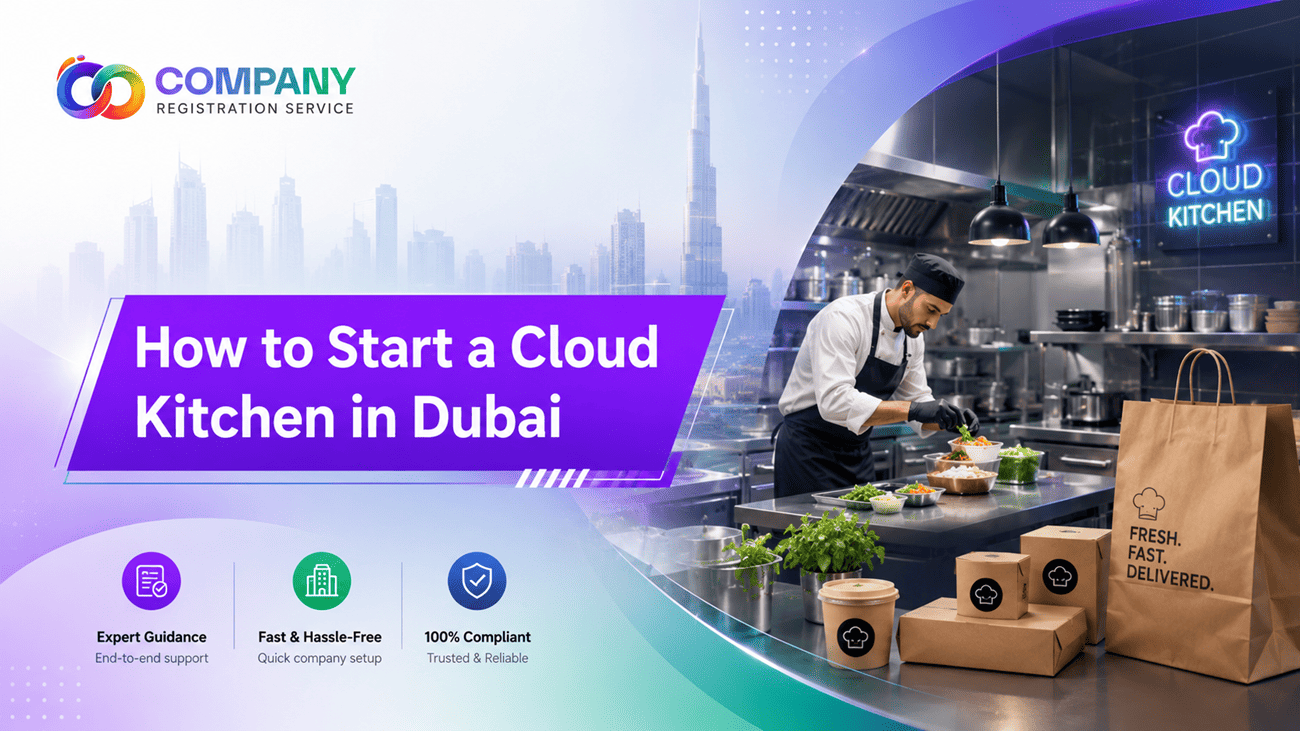
One such operation is a cloud kitchen or virtual kitchens Dubai in which it prepares food only for delivery purposes. When a customer orders something online, the kitchen cooks the meal and then passes it to a delivery rider, who delivers it to the house of that customer. You won’t even have a dining area, waiter service, or customer-facing storefront.
There are several reasons why Dubai is a match in this model. Locals often order from food-delivery apps, expatriates here are numerous — and hungry for something new. In addition, since it is a delivery-based model, founders can experiment with various menu ideas without having to open separate restaurants.
Dubai’s wider food sector also continues to attract new operators. In fact, DET reported that almost 1,200 new restaurant licences were issued during 2024, which shows both strong opportunity and serious competition. Get details on Company Registration in UAE.
Cloud Kitchen Business Models in Dubai
Your operating model will shape your licence, kitchen size, staffing needs and startup budget.
Independent Cloud Kitchen
You develop one food brand, operate your own approved kitchen and manage recipes, packaging and marketing. This model offers control, although it requires a stronger upfront investment.
Multi-Brand or Ghost Kitchen
A ghost kitchen Dubai operator may run several food concepts from one facility. For instance, the same kitchen could prepare burgers, healthy bowls and desserts under three different online brand names.
Shared Kitchen Space
You rent an approved workstation inside a larger commercial kitchen. Consequently, you avoid spending heavily on fit-out, extraction systems and major equipment.
Franchise Model
A cloud kitchen franchise Dubai arrangement gives you access to an established brand, menu and operating system. However, you’ll usually pay franchise fees, royalties or marketing contributions.
Aggregator-Led Kitchen
Some delivery platforms and kitchen operators provide space, order technology and logistical support. Although setup can be quicker, commissions and service charges may reduce your margin. Looking for a Company Registration in Dubai?
Mainland vs Free Zone Cloud Kitchen Setup
The right jurisdiction depends on where you’ll prepare food, how you’ll deliver it and whether the chosen facility has approval for commercial food production.
|
Factor |
Dubai Mainland |
Dubai Free Zone |
|
Licensing authority |
Dubai DET |
Relevant free-zone authority |
|
Foreign ownership |
Generally 100% for eligible activities |
100% |
|
Suitable premises |
Approved mainland commercial kitchen |
Approved premises within the selected zone |
|
Local delivery access |
Generally more straightforward across Dubai |
May depend on the activity, facility and operating structure |
|
Typical licence range |
AED 12,000–25,000+ |
AED 10,000–25,000+ |
|
Best suited to |
Brands targeting Dubai-wide delivery |
Businesses using approved zone-based facilities or specialised packages |
|
Additional approvals |
Dubai Municipality and other activity-specific approvals |
Free-zone approval plus food and premises approvals where applicable |
These figures are indicative. Your activity, trade name, premises, visa allocation and external approvals will affect the final amount.
Legal Requirements and Licensing Process
Most mainland founders start by applying through Dubai’s Department of Economy and Tourism. People often refer to this commercial authorisation as a DED food license, although DET is the department’s current name.
You must select a business activity that accurately covers food preparation, meal production or restaurant-related operations. Additionally, you’ll need premises that meet Dubai Municipality’s food-establishment standards.
The usual approval journey may include:
- Commercial activity and trade-name approval
- Initial approval from the licensing authority
- Tenancy contract or approved shared-kitchen agreement
- Kitchen layout assessment
- Food-establishment and food-activity approvals
- Food-safety training and appointment of responsible personnel
- Civil Defence or building-related clearance where required
- Final commercial licence issuance
A cloud kitchen permit Dubai Municipality is not a single universal document for every business. Instead, the required municipal approvals depend on the activity, menu, premises, kitchen design, equipment and operating method. Get details on Company Registration in Ajman.
Step-by-Step Process to Register a Cloud Kitchen
1. Define Your Food Concept
Decide what you’ll sell, who will buy it and how far you can deliver without damaging food quality. A ten-page menu may look impressive, but it often creates waste and slows preparation.
2. Choose the Legal Structure and Jurisdiction
Select a mainland or free-zone structure based on your premises and intended market. Meanwhile, decide whether you need a sole establishment, civil company or limited liability company structure.
3. Reserve the Trade Name
Choose a name that follows UAE naming rules and doesn’t conflict with an existing business. Ideally, your legal company name should also support future expansion beyond one food brand.
4. Obtain Initial Approval
Submit the shareholders’ identification documents, proposed activity and legal structure to the licensing authority. Initial approval allows you to proceed with premises and external clearances.
5. Secure an Approved Kitchen
You can lease and fit out your own facility or rent space in a licensed shared kitchen. However, don’t sign a long lease until you confirm that the site supports your intended food activity.
6. Submit the Kitchen Layout
Dubai Municipality can check the design of food-flow, preparation zones, storage space, handwashing stations and areas for ventilation, drainage, waste controls and equipment placement. Hence, hire a competent food-service designer instead of an interior contractor.
7. Complete Food-Safety Requirements
Your team needs to comply with hygiene, temperature-control, cleaning, pest-management and food-storage procedures. In addition to this, staff may need food-safety training as it relates to their job functions.
8. Finalise the Licence and Start Operations
After receiving the required approvals, complete the licence issuance, employee visas, insurance and supplier arrangements. You can then onboard delivery platforms and launch your ordering channels. Looking for a Company Registration in Sharjah?
Documents Required for Registration
The exact file will vary, although founders commonly need:
- Passport copies of shareholders and managers
- UAE visa and Emirates ID copies, where applicable
- Passport-sized photographs
- Proposed trade names
- Initial approval documents
- Memorandum of Association, if required
- Tenancy contract or shared-kitchen agreement
- Ejari registration for qualifying mainland premises
- Kitchen floor plan and equipment layout
- No-objection certificate when applicable
- Food-safety and external approval documents
- Franchise agreement, where relevant
Incomplete floor plans or unclear tenancy rights often cause delays. As a result, review the complete document file before submitting it.
How Much Does a Cloud Kitchen Cost in Dubai?
The cloud kitchen cost in Dubai depends mainly on whether you use a shared kitchen or build your own facility.
|
Expense |
Indicative Cost |
|
Trade licence and registration |
AED 10,000–25,000+ |
|
Municipality and external approvals |
AED 2,000–10,000+ |
|
Kitchen layout and technical drawings |
AED 3,000–12,000 |
|
Shared-kitchen rent |
AED 4,000–15,000 per month |
|
Private kitchen rent |
AED 60,000–250,000+ per year |
|
Fit-out and equipment |
AED 80,000–500,000+ |
|
Food-safety training and certifications |
AED 500–3,000+ |
|
Visa per person |
AED 3,500–7,500+ |
|
Branding, packaging and photography |
AED 8,000–40,000 |
|
Delivery-platform commission |
Commonly 15%–35% of order value |
|
Initial ingredients and working capital |
AED 20,000–100,000+ |
You could start a small shared-kitchen concept from around AED 60,000 to AED 150,000 including minimum level of working capital. Conversely, an all-in-one private site could cost between AED 250,000 and a staggering AED 700,000 (or above).
All amounts are planning estimates and not official quotes. Remember to confirm current government rates and rent terms, platform terms and estimated fit-out costs before you part with funds. Get details on Company Registration in England.
Best Locations and Free Zones for Cloud Kitchens
Not every neighborhood is perfect for every concept. Rather, pick an area that allows you to reach your target customers with ease.
Al Quoz works for brands looking at central Dubai locations, Business Bay, Downtown and other close residential communities. Al Barsha is a handy access point of existing areas, while Dubai Investment Park could suit big production facilities and companies servicing the south Ushant for only three-month periods with Dubai.
Al Ras Al Khor, International City, Dubai Silicon Oasis and areas adjacent to Jumeirah Village Circle could also back the delivery-oriented assets but only based upon the available rent and infrastructure. Moreover, some free trades give food or business parcels, however you should confirm whether cooking is permitted on the premises and whether your delivery model works according to plan.
An inexpensive kitchen that is too far removed from customers may end up being more expensive through lost delivery times, cancelled orders and poor food quality. So before you decide on a site, go map your radius. Looking for a Company Registration in Abu Dhabi?
Common Challenges and How to Overcome Them
Commissions from delivery platforms can gnaw at profit margins in no time. Therefore, include the commission in your pricing and incentivize recurrence customers to order via your direct ordering channel when its legal and operationally feasible.
Food quality is changed through transport too. As would crispy food turning soft, saucy items leaking and frozen desserts melting in the same compartment. Anything that was not on the menu and your deliciousness from a 30 to 40-minute realistic delivery trip time for all of these menu items.
Conversely, a wide-ranging menu provides inventory challenges. Look to connect dishes with common ingredients and preparation techniques. This way, you not only save money on wastage but also find it much easier to train your staff.
And lastly, use the discount sparingly. First-time orders flow from promotions; repeated business arises from solid packaging, dependable preparation and consistency of taste.
Related Services:
» Business License in Saudi Arabia
» Register Branch Office in Saudi Arabia
» Company Dissolution Services Saudi Arabia
» Business Setup in Special Economic Zone in Saudi Arabia
» Foreign Company Registration in Saudi Arabia
» Company Registration in Oman Free Zone
» Company Registration in London
» Company Registration in Riyadh
» Company Registration in Texas
Practical Tips for Cloud Kitchen Success
Consider menu engineering with one foot in the world of finances as well as the creative side (two sides to this coin). For every item, track ingredient cost, packaging and platform commission, prep time & promotional deductions.
Also get professional food photography since your customers are not able to see the dish or smell it when they order. Clear descriptions, precise portion information and realistic photographs help drive better conversion and less complaints.
Use More than One Delivery Platform Whenever Possible However, you have to keep track of each platform individually because volume does not always equal profit.
Beyond the app listing you should also create a recognisable brand. Social media, Google visibility, customer reviews and ordering via WhatsApp with loyalty campaigns will help you to gradually reduce reliance on the aggregators.
Related Articles:
» Setting Up a UAE Holding Company for GCC Regional Expansion
» 100% Foreign Ownership in Dubai Mainland — Sectors, Process and Reality Check
» Mainland vs Free Zone vs Offshore Company Setup in Dubai 2026 — Which Is Right for You?
» Best Dubai Free Zones for Tech Startups, AI, and Digital Businesses
» Opening a Corporate Bank Account in Dubai as a Foreign Investor
Why Work With a Business Setup Consultant?
Setting up a cloud kitchen business model UAE project is not just about trade licence. Your operations need to be compatible with your business activity selection, and your tenancy contract should allow food preparation and your kitchen design should meet specified standards.
But also a consultant is capable of coordinating the licensing authority, Municipality requirements, the review of premises and documentation, Passport processing and visa et cetera. Most importantly, an experienced adviser can spot an expensive mistake before you ever sign a lease or begin construction.
Whether you want to know about compare jurisdictions, select activity, licensing, external approvals and visa support; Company Registration Service provides complete cloud kitchen services. Talk to the team before making any promises and lay the foundation for your food business organized around how it really works.
FAQs: How to Start a Cloud Kitchen in Dubai
Commercial licence covering the appropriate food-preparation or restaurant activity. Typically, mainland companies would acquire the licence via Dubai DET whilst free-zone businesses would apply through their appropriate zone authority. Food-Establishment & Premises Approval You will also need this done as well.
A small scale operation with a shared kitchen may need only around AED 60,000 to AED 150,000 in total for licensing,rent,equipment and initial working capital. Private individual kitchens also range from AED 250,000 to AED 700,000 or even up.
A straightforward shared-kitchen setup may take a few weeks once the documents and approved facility are ready. However, a new kitchen requiring design review, fit-out and inspections can take several weeks or a few months.
Yes, provided the free zone supports the activity and the chosen premises have approval for commercial food preparation. You should also check how the structure affects delivery operations outside the zone.
Mainland is usually well equipped for establishments whose aim is to reach Dubai’s local delivery market. In contrast, a free-zone arrangement might be appropriate where an authorized facility and relevant food activity exists in the zone.
Generally food handlers and people-dedicated staff will require appropriate training for their designated roles needed by the establishment. The kitchen must also adhere to sanitation, cleaning, storage and temperature-control protocols set by the business.
Yes. A delivery-only restaurant UAE model can operate without customer seating, provided its licence and approved premises support food preparation and delivery activities.
You shouldn’t operate a commercial kitchen from a residential apartment without the required licence and approvals. Home-based food activities follow separate rules and controls, so confirm eligibility before selling food online.
Yes, a single facility may operate multiple virtual brands when the licence, approved activities and kitchen capacity support them. Nevertheless, each concept must follow the same food-safety and labelling requirements.
Yes. Franchise options can provide an established menu, brand identity and operating system. However, review the franchise fee, royalty, territory, supply obligations and licence requirements before signing.
No, you can usually complete the licensing process before signing with delivery platforms. However, platforms will normally request your trade licence, banking details, menu, food images and other company documents during onboarding.
A consultant can help you choose the jurisdiction, select the correct activity, review premises, organise approvals and prepare the registration file. Consequently, you reduce delays and avoid committing money to an unsuitable kitchen.